
One common question new puppy buyers ask is whether Golden Retriever dew claws should be removed. For many years, removing dew claws in puppies was considered standard practice among breeders. Today, however, the consensus is shifting—especially among breeders of athletic, working dogs. At Field Bred Golden Retrievers, we leave dew claws intact, and this decision is based on modern understanding of canine anatomy, performance-dog structure, and real-world experience with active retrievers.
What Are Dew Claws in Dogs?
Dew claws are the small digits located slightly higher up on the inside of a dog's front legs. Unlike rear dew claws (which are uncommon in Golden Retrievers), front dew claws are attached to bone, tendons, and muscle. They are a natural part of the dog's structure—not just loose skin.
Research and observation in performance dogs show that dew claws can contact the ground when a dog runs at speed, turns sharply, climbs terrain, lands from a jump, or stabilizes during retrieves. For field-bred Golden Retrievers, which are bred for athletic performance and endurance, this structural support can matter.
Why Dew Claws Used to Be Removed
Historically, breeders removed dew claws shortly after birth to prevent potential injuries later in life. The assumption was that dew claws could tear easily during activity. For decades, this was considered part of responsible breeding practice, and many veterinarians recommended routine removal. However, as more breeders and trainers gained long-term experience with working retrievers and sporting dogs, that assumption began to be questioned.
The Risk of Dew Claw Injury Is Low
In active dogs, dew claw injuries are relatively uncommon. When they do occur, they are usually minor nail tears that are easily treated—comparable to other nail injuries. Most hunting dogs, field trial dogs, and active companion dogs go their entire lives without any dew claw problems. Because of this, many breeders now question whether routine removal is necessary to prevent a problem that rarely happens.
Dew Claws and Muscle Integrity
One reason more breeders are leaving dew claws intact is a growing awareness that dew claws are connected to the leg's functional anatomy. The dew claw is associated with tendons, ligaments, and stabilizing muscles in the lower leg. Some performance-dog veterinarians and breeders believe removing dew claws may slightly reduce natural stabilization during high-speed movement or tight turns.
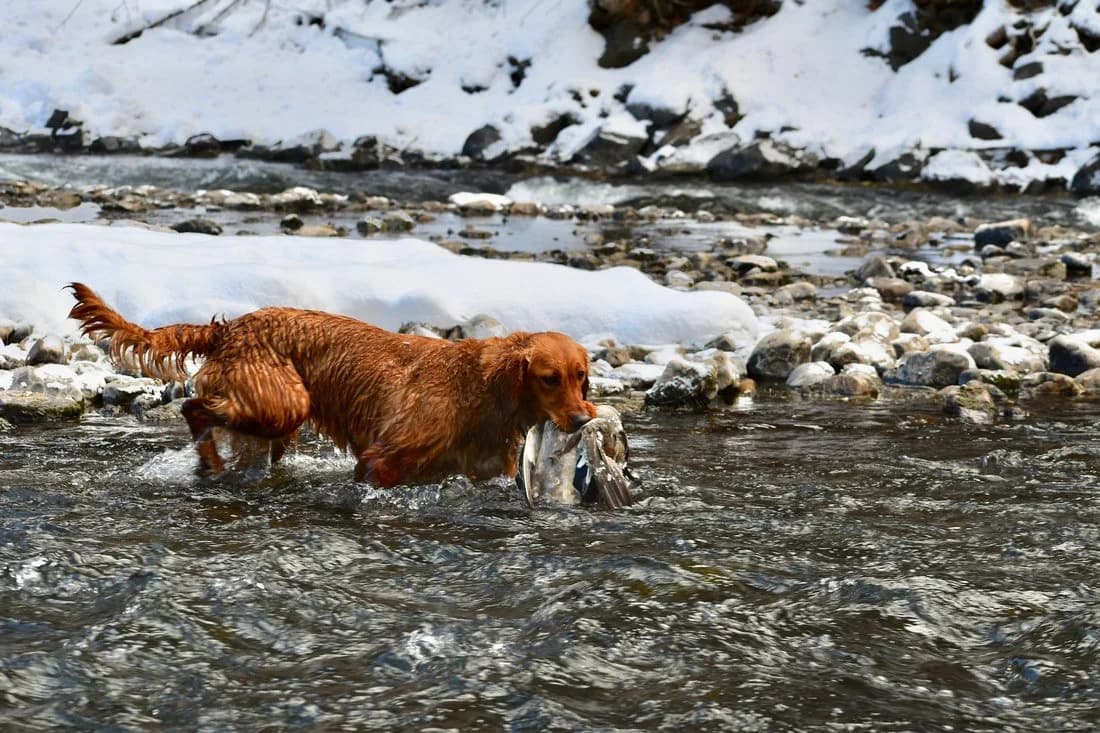
For field-bred Golden Retrievers, whose purpose includes retrieving birds over uneven terrain and through water and ice, preserving natural structure is increasingly prioritized. There was once a viral video clearly showing a golden retriever using its dew claws to climb up and out of ice.
A Shift in Golden Retriever Breeding Philosophy
Breeding practices evolve as knowledge improves. Years ago, removing dew claws was routine and expected. Today, many breeders of working Golden Retrievers and sporting dogs are choosing to leave them. The focus has shifted toward preserving natural anatomy, supporting long-term soundness, maintaining structural integrity, and avoiding unnecessary procedures. This reflects a broader movement in responsible dog breeding toward function-first decisions.

Our Decision at Field Bred Golden Retrievers
At Field Bred Golden Retrievers, we aim to produce dogs that are structurally sound, athletic and capable, healthy for the long term, and true to the working retriever standard. Because dew claw injuries are uncommon and dew claws are part of the dog's functional anatomy, we choose to leave them intact. While reasonable breeders may make different choices, our decision is based on experience with active retrievers and a commitment to preserving natural structure whenever possible.
If you're researching whether Golden Retriever dew claws should be removed, you'll find that opinions are changing. Increasingly, breeders of field-bred and performance dogs are choosing to leave dew claws in place.