

Hemangiosarcoma (HSA) is something many Golden Retriever owners eventually hear about, and it's one of the most researched health concerns in our breed. We recently experienced this firsthand with our own 11-year-old girl, Birdie—a dog who was still running, walking, and acting completely herself until the day her symptoms appeared. Sharing her story helps illustrate why this cancer is so difficult to detect early, and why awareness matters.
What Is Hemangiosarcoma?
Hemangiosarcoma is an aggressive cancer that develops from the cells lining blood vessels. These tumors form internally—often on the spleen, heart (right atrium), or liver. Because they grow quietly and are filled with blood, most dogs show no signs at all until the tumor suddenly ruptures. This was exactly the case with Birdie. She was energetic, eating well, and moving comfortably, right up until the day she suddenly coughed up blood—a sign that something was happening internally.
How Common Is It?
In dogs overall, HSA is not one of the most common cancers across all breeds. In Golden Retrievers, however, the breed has a notably higher genetic susceptibility. Depending on the study, roughly 10–20% of Goldens may develop hemangiosarcoma in their lifetime. Most diagnoses occur between 8–13 years old, which aligned with Birdie's age of 11. This increased risk is the focus of several active Golden Retriever research programs.
Early Signs Owners Should Watch For
The difficulty with HSA is that early symptoms are vague or nonexistent. Dogs can be perfectly normal—as Birdie was—until the day the tumor bleeds.
Subtle signs may include:
- ✦Fatigue or slowing down
- ✦Pale gums
- ✦Decreased appetite
- ✦Brief spells of weakness that resolve
Emergency signs include:
- ✦Sudden collapse
- ✦Distended abdomen
- ✦Pale or white gums
- ✦Rapid or labored breathing
- ✦Weak pulse
- ✦Coughing up blood (rare, but can occur with thoracic involvement—this was Birdie's first noticeable symptom)
When these signs appear, the situation is often critical.

Birdie's Story
Birdie had been her happy, active self until suddenly coughing up blood one morning. Because of the severity of the symptom, we had her evaluated immediately. Her exam and imaging suggested internal bleeding, and we ran a canine cancer blood test (a liquid biopsy). Her results came back extremely high—one of the strongest indicators the test can detect—which helped confirm that this was advanced hemangiosarcoma.
Given her condition, her internal bleeding, her age, and the very poor prognosis associated with this cancer once bleeding has begun, our veterinarian recommended euthanasia that same night. It was sudden, heartbreaking, and unexpected—but her story is also a clear example of how hemangiosarcoma typically presents.
Prognosis
Because most cases aren't discovered until a rupture occurs, the prognosis is often poor. Treatment options include surgery (splenectomy), which sometimes extends life by weeks or months; chemotherapy after surgery, which can extend survival further in select cases; and palliative care focused on comfort. Dermal or skin-based hemangiosarcoma has a more favorable outlook, but splenic or cardiac HSA, like Birdie's case, generally advances quickly and unpredictably.
Where Research Stands Today
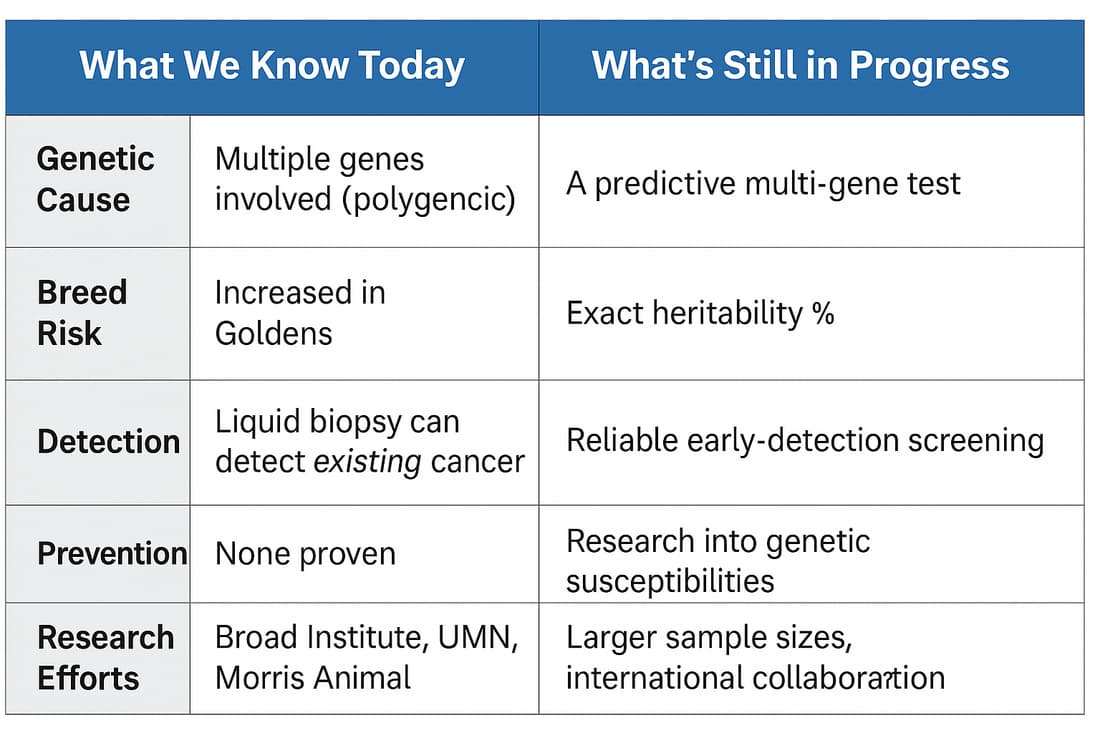
Researchers are not looking for "a single HSA gene." Instead, studies show that hemangiosarcoma risk in Golden Retrievers is polygenic—influenced by multiple genetic regions. Current research from the Broad Institute, University of Minnesota, and Morris Animal Foundation's Golden Retriever Lifetime Study has identified several genomic areas associated with increased risk in Goldens. American vs. European lines may also differ in risk patterns.
Right now: there is no genetic test that can tell you whether a dog will develop HSA. Liquid biopsy tests (like the one Birdie had) can sometimes detect existing cancer, but not predict future risk. Researchers are actively working toward better early detection and potential multi-gene risk scoring in the future.
What Breeders and Owners Can Do
- ✦Track longevity: Knowing which dogs regularly reach 12–14 years helps breeders make informed choices.
- ✦Senior wellness screening: Annual bloodwork and sometimes ultrasound for dogs 8+ can catch issues early.
- ✦Healthy lifestyle: Lean body weight, regular exercise, and good diet support overall health.
- ✦Participate in research: DNA banking and study enrollment help the breed long-term.
As breeders, we pay very close attention to the longevity in our lines. Embark has made genetic testing and banking much more feasible, and we look forward to studying our genetic COI's more closely and trying to lower them as we determine our breeding pairs. We are personally excited about the prospect of a multi-gene risk score that we can include in our testing in the future.
Hemangiosarcoma is one of the toughest challenges in the Golden Retriever world, and Birdie's experience is a reminder of how suddenly it can appear—even in a dog who seems perfectly healthy. Awareness, responsible breeding, and ongoing scientific research are the tools we have today.